Let us get this out of the way: we are not going to save the world through tourism. No travel company is. The idea that buying a plane ticket and sleeping in an eco-lodge constitutes meaningful impact is, at best, naive. At worst, it is a convenient lie that lets everyone feel good while changing nothing.
So when we say our journeys are purpose-driven, we are not selling redemption. We are describing a design principle. A filter that every experience, every partner, and every itinerary must pass through before it carries our name.
The filter
It starts with a question we ask about every experience in our portfolio: does this leave the place and its people better off, worse off, or unchanged?
Worse off is obvious. We do not work with operators who overuse fragile sites, who treat local communities as scenery, or who extract value from a destination without returning anything. That should be the baseline for any company. It is not, but it should be.
Unchanged is trickier. A lot of high-end travel exists in a bubble. The traveler arrives, has a beautiful experience, and leaves. The hotel was lovely. The guide was knowledgeable. The scenery was breathtaking. And none of it touched the community next door. The money went to international chains. The guide was flown in from the capital. The village down the road did not know anyone was there.
We are not interested in unchanged. If a journey passes through a community, that community should feel the benefit. Not as charity. As commerce. As partnership. As the straightforward exchange of value between people who have something extraordinary to share and travelers willing to pay fairly for it.
What this looks like in practice
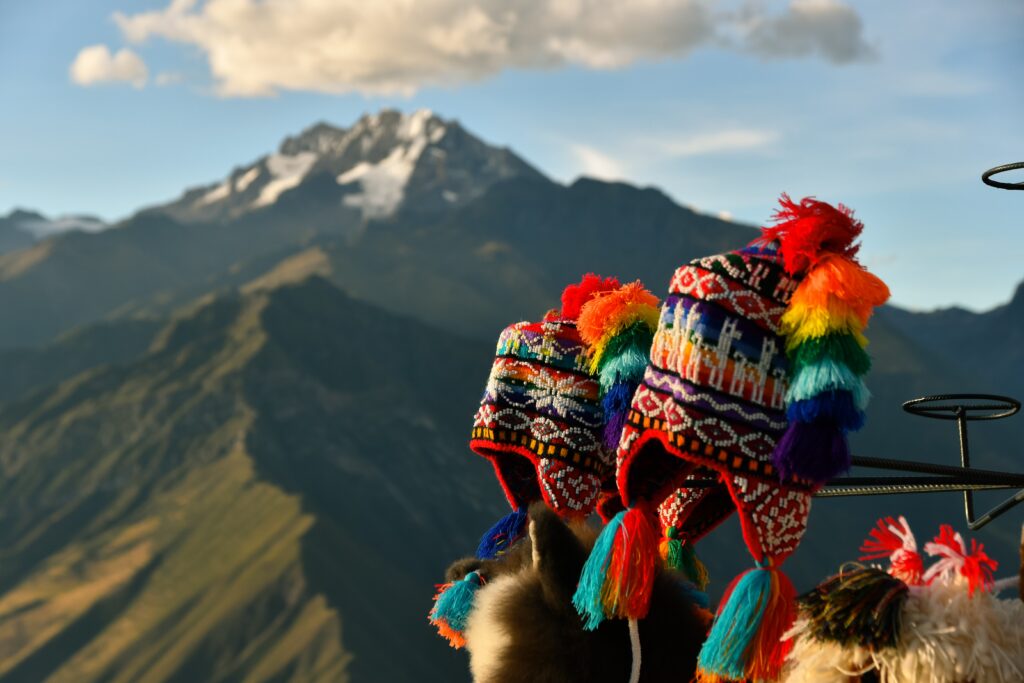
In the highlands of Ecuador, we work with an indigenous community that produces textiles using techniques that predate the Inca conquest. For years, their primary customer was a middleman in Otavalo who paid them a fraction of the market value. We connected them directly with our travelers. Now they sell at full price, face to face, to people who understand what they are buying. The travelers get a real experience. The weavers get economic independence. Nobody needed a charity label to make that work.
In Ecuador’s Pacific coast, we partner with a community-run ecotourism project that employs young people from fishing families who were running out of fish. The whale-watching operation they built — with guidance, but owned entirely by them — now generates more income in four months than most of the community earned in a year from fishing. Our travelers are part of that. Not as donors. As clients.
In the Bolivian Altiplano, we commissioned a local cooperative to build a small rest station along a route that our travelers use. They own it. They run it. They serve lunch to anyone who passes through — our clients and Bolivian truckers alike. The food is extraordinary. The view is absurd. And the money stays exactly where it should.
The conservation side
Purpose is not only about people. In the Galapagos, every journey we design includes a direct contribution to ongoing conservation research. Not a symbolic donation. Participation. Our travelers have helped tag sea turtles, count land iguana nests, and collect water samples for the Charles Darwin Research Station. A marine biologist from Berlin who traveled with us in 2025 said it was the first time in twenty years of vacations that she felt useful.
In Patagonia, we work with a private reserve that is restoring overgrazed estancia land to native grassland. Travelers who visit spend a morning planting native species and an afternoon hiking through land that was barren five years ago and now supports guanacos and foxes. The satisfaction of putting a seedling in the ground and knowing it will outlive you is not something we invented. It is something this continent makes possible.
The honest version
We are not perfect. Some of our suppliers still use single-use plastics. Some routes require internal flights we wish we could avoid. The carbon footprint of international travel is real, and no offset program fully compensates for it. We are honest about this because pretending otherwise would undermine everything else we stand for.
What we can promise is that every journey we design is built with intention. That the people and places you encounter are partners, not props. That the money you spend circulates in the local economy rather than being extracted from it. And that when you go home, the places you visited are not worse for your having been there.
That is purpose-driven travel. Not a slogan. A practice. Imperfect, ongoing, and the only way we know how to work.