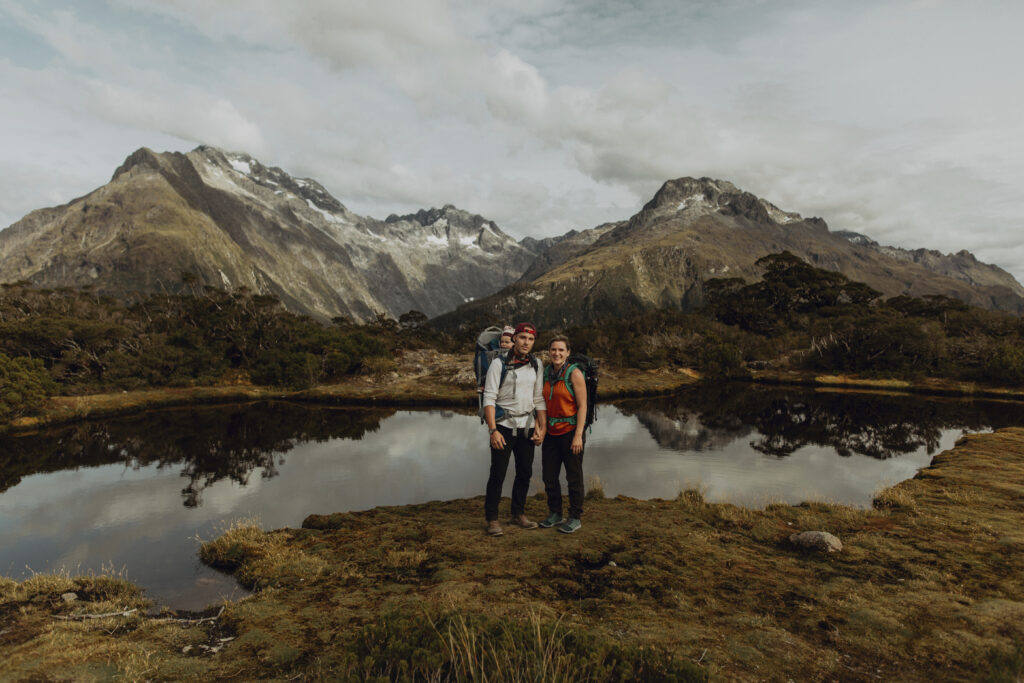
There is a particular kind of disappointment that comes from arriving somewhere extraordinary and realizing you are seeing it exactly the way ten thousand other people saw it last month. Same viewpoint. Same photo angle. Same rehearsed explanation from a guide reading off a laminated card.
South America, more than most continents, punishes that approach.
Not because the popular sights are not worth visiting. Machu Picchu at dawn is still Machu Picchu at dawn. The Galapagos will still rearrange your understanding of the natural world. But the distance between the packaged version of these places and the real version is enormous. And it is growing every year.
The problem with catalogs
Most travel companies operating in South America work from templates. They have a Peru itinerary, a Bolivia itinerary, an Ecuador itinerary. Maybe they shuffle the hotels or adjust the number of nights. But the skeleton is the same. The logic is efficiency, not discovery.
That logic fails here for a simple reason: this continent does not reveal itself on a schedule. The conversation with a weaver in Otavalo that changes how you think about craft and patience does not happen when you have forty-five minutes before the bus leaves. The cove in the Galapagos where sea lions swim alongside you at sunset is not on any fixed itinerary. The family-run restaurant in Cartagena where the grandmother still makes the sofrito by hand — you will never find it on TripAdvisor.
These are the moments that make a journey through South America worth taking. And none of them can be mass-produced.
What bespoke actually means
The word gets thrown around a lot in the travel industry. Plenty of operators use it while still pulling from the same menu of options. Bespoke, when it is real, means something more uncomfortable for the company: it means starting from nothing. A blank page. A conversation. A willingness to build something that has never existed before and might never exist again.
It means a designer — what we call a Tailor — who listens before they plan. Who asks questions that a booking form never would. Who understands that a couple celebrating twenty years together needs a fundamentally different journey than a solo traveler in their thirties looking to reconnect with something they lost along the way.
It means knowing a continent well enough to break the rules. To combine two countries in a way no one else does. To find the guide who grew up in the valley you are about to explore and can tell you things that no guidebook has ever printed.
The real cost of the cheaper option
The packaged tour is not cheaper. It just hides the cost differently. You pay with time wasted at places you did not choose. With meals at restaurants selected for their bus-parking capacity, not their food. With a schedule that serves the operator, not you. With the nagging feeling, somewhere around day four, that you are seeing a performance of a country rather than the country itself.
A bespoke journey costs more in currency. It costs nothing in regret.
South America deserves better than a brochure
Five countries. Seventeen climate zones. Hundreds of indigenous languages still spoken. A continent where you can stand on a glacier in the morning and have dinner in a desert town by evening. Where the food is changing faster than any critic can document. Where communities that have been overlooked by mass tourism are ready to welcome travelers who come with genuine curiosity.
You cannot compress that into a seven-day package. You should not try.
The question is not whether you can afford to travel bespoke. The question is whether you can afford to visit a continent this rich and come home with someone else’s experience.